Skip to the page

A day in Thinkwell.

Plan it, write it, test it, publish it, and learn from the people who read it.

Plan it.

Say what you need in plain words. Thinkwell turns it into a plan, with tasks and owners.

A goal in plain words becomes a plan, with the research behind it. The loop shows the real screens, with sample data, in turn: The goal, as typed, and what Thinkwell understood of it. Who decides, and the question the plan turns on. The web research it ran, and the brief it drafted from it.

Write it.

Draft from your research, with each claim tied to its source.

Thinkwell showing a rapid response: the drafted reply, and how three simulated audiences trusted the client before and after it, each as a range.Thinkwell showing a rapid response: the drafted reply, and how three simulated audiences trusted the client before and after it, each as a range.Thinkwell showing a rapid response: the drafted reply, and how three simulated audiences trusted the client before and after it, each as a range.
A rapid response, tried on simulated audiences first: each reading is a range. The real screen, with sample data.

Test it.

See how your draft reads against the norm for its kind, in plain words, with a note on each paragraph.
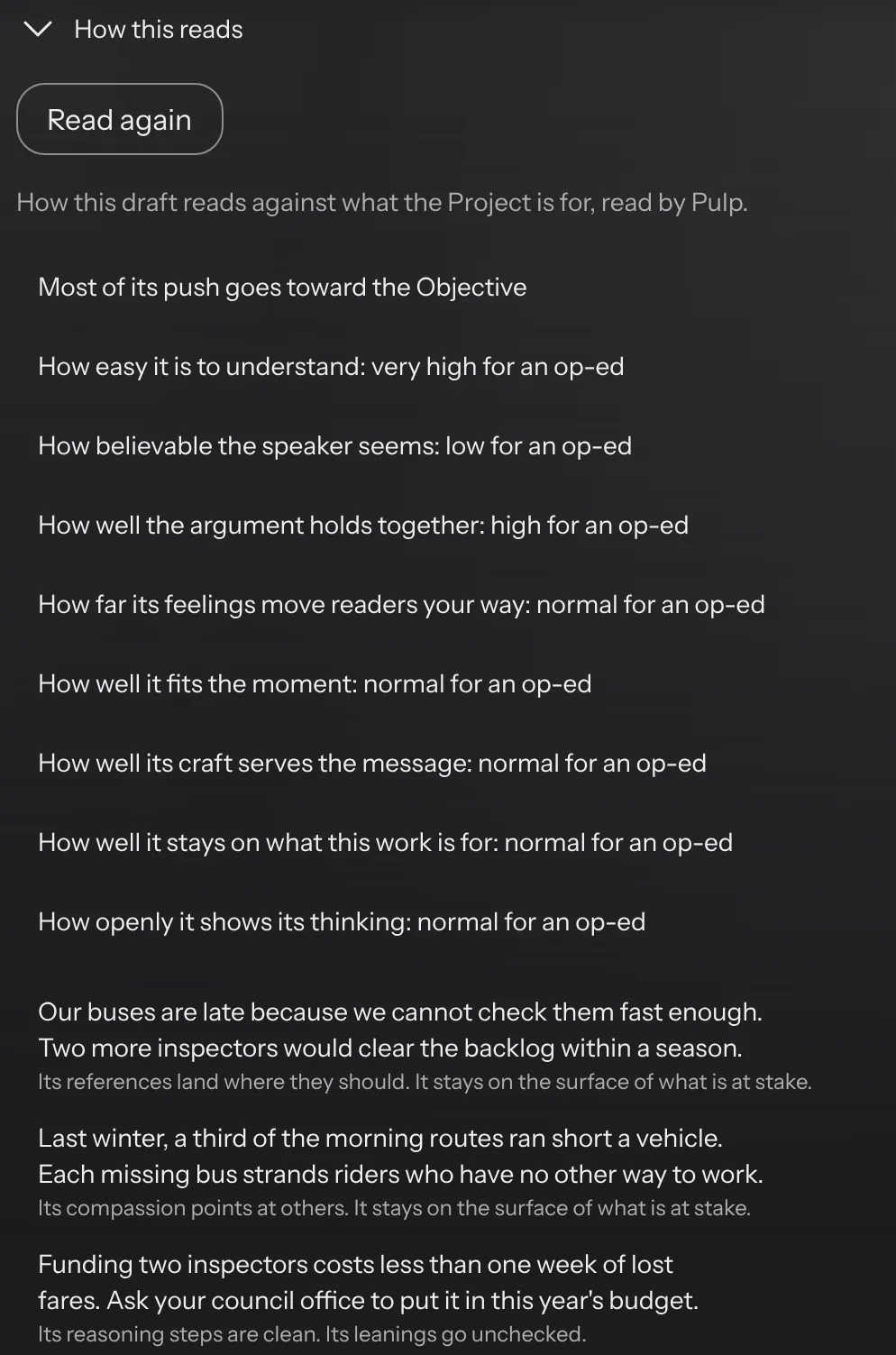
Thinkwell’s How this reads panel for a draft op-ed: “How easy it is to understand: very high for an op-ed”, “How believable the speaker seems: low for an op-ed”, “How well the argument holds together: high for an op-ed”, six more readings, each against what is normal for an op-ed, and then the draft’s three paragraphs, each with a short note on what it does well and where it falls short.
A real screen: Thinkwell on staging, November 20, 2026. The draft is one we wrote to test it.

Publish it.

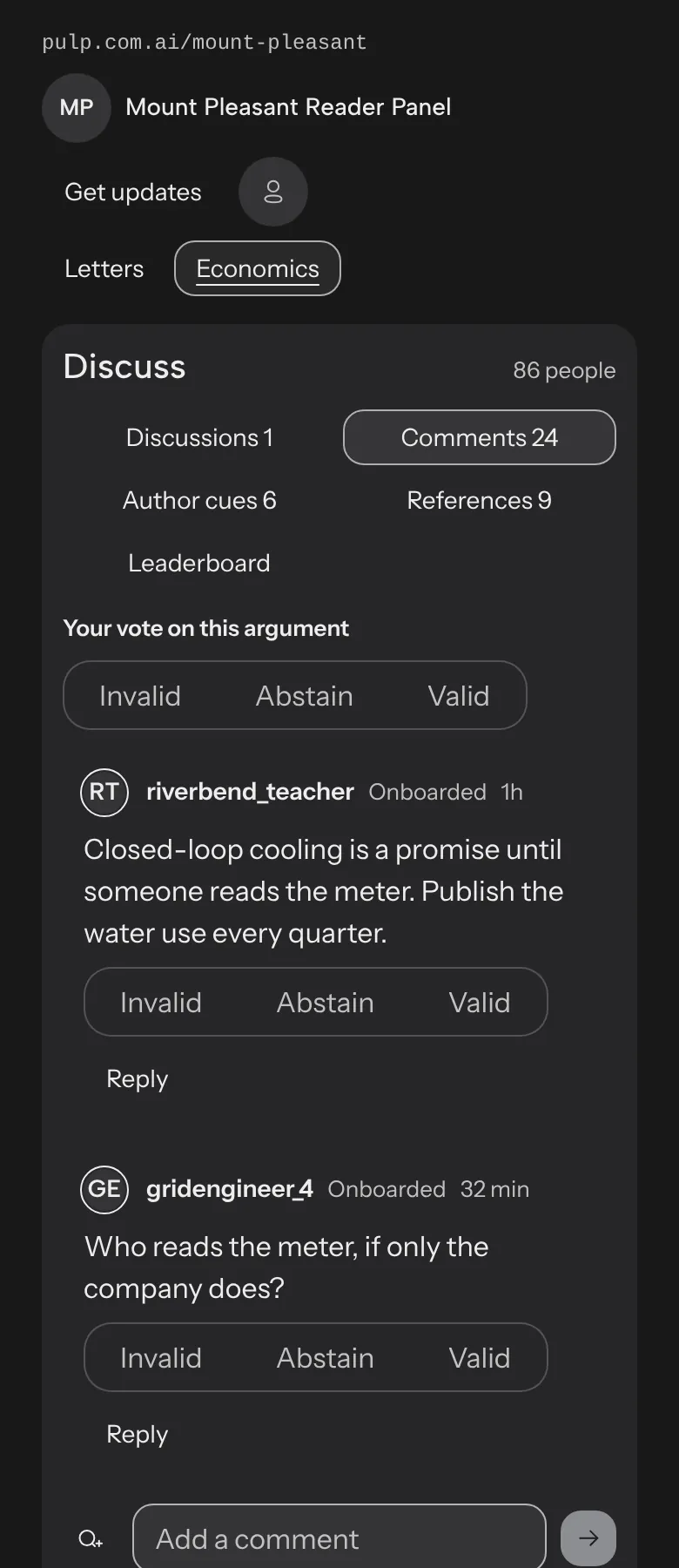
Publish it to a site of your own. Readers vote on each argument, then talk it through.
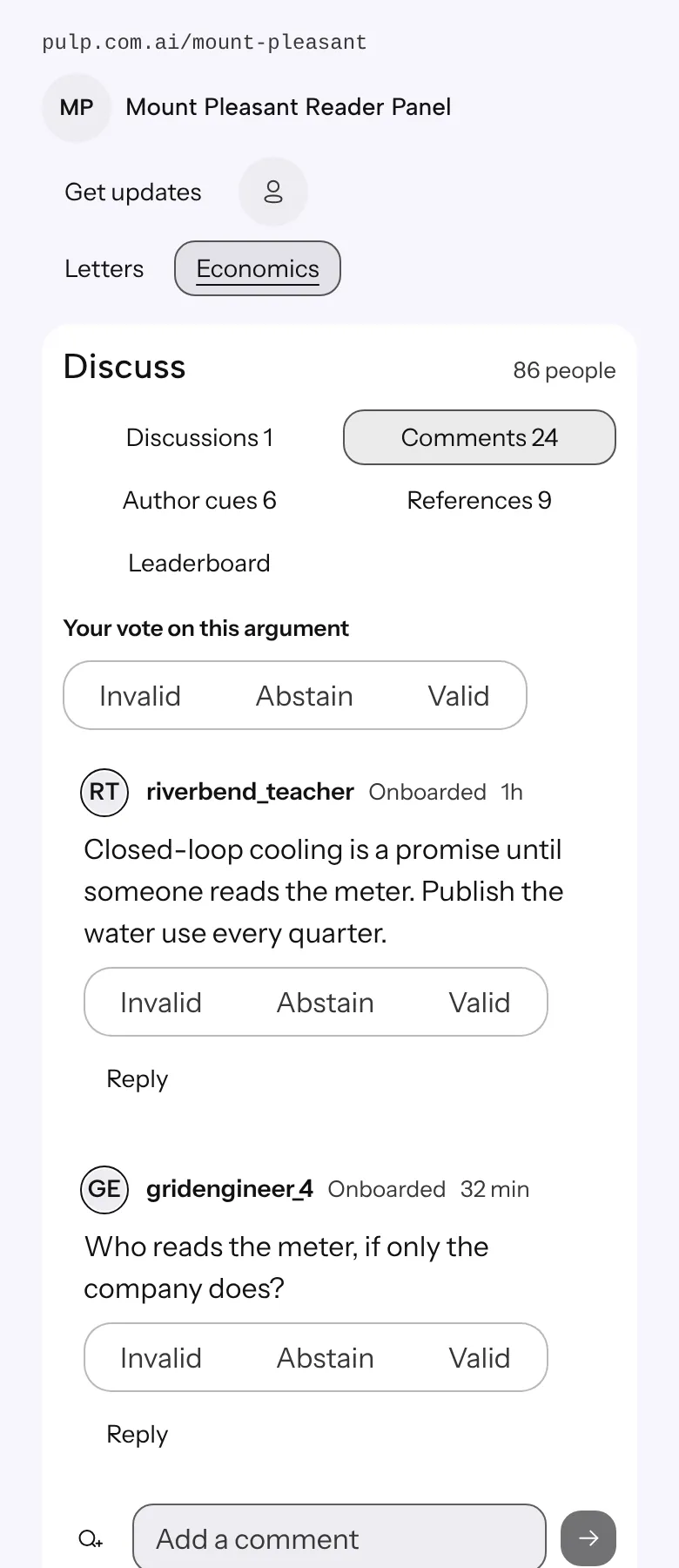
A public discussion on a hosted campaign page: participants vote whether an argument is valid, and reply to each other.A public discussion on a hosted campaign page: participants vote whether an argument is valid, and reply to each other.A public discussion on a hosted campaign page: participants vote whether an argument is valid, and reply to each other.
A structured discussion on a campaign page of your own. The real screen, with sample data.

Learn from real readers.

See how readers took each piece, and what they said back.

A dashboard where every number names its source. The loop shows the real screens, with sample data, in turn: A campaign dashboard: how readers received each piece, and the debate’s scores. One chart up close, with its source beneath it.

What sets it apart.

See Thinkwell on your own work.

See the workstation, explore a real workflow, and discover how Thinkwell can be configured for your organization.

Request a DemoSee plans and sign up